Click here for more.

6/11/11

Conversations with a sex worker


sex worker
A young Cambodian relates the appalling events that led her into prostitution.

It was the sort of day that made you want to really seize all opportunities. There was a beautiful blue sky dotted with white wisps of clouds and the kind of sun benevolent enough not to burn your skin. It was 8am in Cambodia and the adventure at hand was a trip through Angkor Archaeological Park. My guide? A 22-year-old sex worker named Samnang, the Cambodian word for Good Fortune.

“You can call me Sam,” she said, smiling shyly.

I had met Sam two days earlier, by accident, when I got lost meandering through the streets of Siem Reap. At first, she tried giving me directions, but when I failed to comprehend, mostly because I’m not good with maps, Sam offered to walk me back to where I was staying during my week-long visit.

When we arrived, I asked Sam to have dinner with me, but she declined, saying she had to work. When I asked what she worked as, she explained in halting English that she was a sex worker. I tried to sound casual, telling her why I was in Cambodia and that I was looking for someone who could show me around. I asked if she would be interested.

And so, two days later, on a gorgeous day in Siem Rep, Sam takes me on a journey very different from the one I had in mind.

As we walk down Sivatha Road, we talk about our lives and I ask her if she would tell her story for me to share with others. She agrees but asks that no photographs be taken. We find a restaurant and seat ourselves for a meal. Spicy chicken rice at 8.30am is indeed the breakfast of champions.

The Journey Begins

Sam’s life began as a rather happy one, but it quickly turned into a horrific series of events. Born in Vietnam, she went to Thailand when she was 17 in search of a better life. She found a job as a waitress. One day, she met a foreigner named Gerard who was very pleased to learn that she was a Vietnam native. He was a businessman who was enthusiastic about importing cheap scooters into Vietnam.

After several lunches and dinners, Sam agreed to take Gerard to Vietnam to help him start his business. Felicitations of love followed soon after, and a promise of marriage was extended. One thing led to another and Sam found herself pregnant two months into the relationship. The business was also warming up. But Gerard’s ardour toward her cooled drastically.

“He began ignoring me and wasn’t shy about doing it openly,” she shares. Gerard also turned out to be a paedophile, having his way with many underage girls. “In Vietnam, if you have money, you can get away with anything; you just pay the police to keep them quiet,” Sam says, frowning. I tell her that this happens around the world.

Gerard left Sam in her third month of pregnancy. “I tried asking him to help me and the baby with some money, but he said it’s not his problem anymore,” she says, her voice thick with emotion. “He told me that I should get an abortion, which he was willing to pay for. I didn’t want to do this and I had nowhere to go. One day, while I was looking for odd jobs, I met an old friend who was working as a seamstress. She took me in without question.”

On the Run

Months later, Sam gave birth to a beautiful girl and named her Maelea, which means Flower Garland. Soon after this, she found a job as a cleaner and life seemed better for a while.

About a year later, while she was out with her baby, Sam bumped into Gerard at the local market. The man who initially wanted to get rid of the baby now wanted her for himself when he saw how cute she was. “I refused of course,” Sam says. “I knew what he did with the other young girls. I didn’t trust him anymore and I was afraid that he would hurt my baby.”

But Gerard got his way through his connections and by using corrupt officials. But after a month, Sam got Maelea back with the help of a visiting social worker from the United States.

“I cried for days after I saw what he had done to my baby. Her private parts were swollen and discoloured. She was only one year old.” Sam’s petite body shook with heavy sobs from this terrible memory.

When confronted, Gerard rejected the accusations and threatened to hurt Sam and the baby if she continued to pester him. But he still wanted Maelea. “He would come to the house that I shared with my friend and send thugs over to threaten us. I was afraid for our safety and decided that I would leave and hide out in Cambodia.”

Starting Anew

After a difficult journey, Sam found herself in a foreign country. She couldn’t speak the language, and had a little child to feed.

“I tried for three months to find a job. No one would hire me. I had to beg on the streets with my daughter in my arms. We were staying at bus stands and wherever else that we could find shelter. I thought that if feeding my daughter and providing her with a roof over her head meant that I had to sell my body, then it was a small price to pay.” And so she turned to prostitution.

“I will never forget the first time I did it. I just kept my mind on the food that I will be able to buy for my child and me. That made it easier.

“I have been doing this for four years now and have met many women like me. In the early days, one of them told me that I would get used to it, that it would get easier. This is not true. I have never gotten used to it and I will not be doing this for much longer.” There was conviction in her voice.

Sam says she will give it another half a year. “What will my daughter think?” I am stumped for a reply.

“Soon, she will be old enough to start asking me questions,” she adds. Later, I ask her if she would ever tell Maelea of her past. Sam takes a long pause and says, “Right now, I don’t know if I will. I want to be honest, but I also think that she doesn’t have to know the ugly side of my life.”

I ask what she would like to do for a living.

“I am saving some money to go back to school and study. I want to become a teacher.” And then she asks shyly, “Do you think I can?”

I am too overwhelmed to say anything and I nod my answer.

At the time of writing, Sam has already started her classes. After so much misfortune, it does look like she is going to live up to the meaning of her name after all.

Conversations with a sex worker

Read more ►

5/23/11

Sex abuse: The truth is out there


Sex abuse

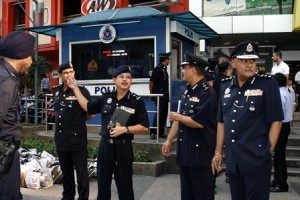
When the nation’s top cop orders the 2010 Crime Statistics booklet be placed under the banner of Official Secrets Act, berefting the people details on the state of crime affecting women and children, what should the people make of it?

The statistics are available in a booklet prepared by Bukit Aman’s Sexual Crimes Child Abuse Division.

Women’s Aid Organisation (WAO), a non-governmental organisation, had three months ago requested for the information. The police responded saying they were unable to provide the details as the figures were classified as confidential documents.

The statistics requested include cases of domestic violence, rape, incest, domestic worker abuse and child abuse.

Thinking that the police made a mistake, WAO on April 1 wrote yet again to Bukit Aman, explaining why the statistics were needed. On April 28, WAO received the 2010 Crime Statistics from Bukit Aman with a cover letter informing that the information given was for reference and research purposes only – it cannot be shared with a third party.

Puzzled by the sudden change of affairs, WAO put in a letter of appeal asking that the decision be reconsidered.

The Inspector-General of Police, Ismail Omar, the man who barred the information from becoming public knowledge, is now claiming he had no idea of the WAO request.

“I haven’t seen the application. I have no idea what it’s about,” was how Ismail tried to wriggle his exit.

But as WAO executive director Ivy Josiah said, why are the police hiding the truth about sexual crimes against children?
Public education messages

sex abuse
WAO wants the information de-classified as the information in the booklet is important in learning the trends of sexual crime to help people understand the issue of violence against women.

Said Josiah: “We need them to formulate public education messages and policy reform. For example, an important statistic is how many women die in their own homes and whether there are prior domestic violence reports so we can see if there’s a link.”

Speculating on Bukit Aman’s refusal to release the statistics unlike previously, she said it could be that the information puts the country in a bad light.

To Josiah, the best way to overcome such obstacles is by putting in place a Freedom of Information Act.

For WAO, the statistics assist it in offering services that are relevant with the changing times. And statistics are crucial as it helps the group to understand trends and effects.

Without the statistics, WAO is unable to focus its attention on those who need it most and to help combat these crimes.

In April 2009, Deputy Home Minister Chor Chee Heung reported to the Dewan Negara that compared with 1,241 rape cases reported in 2007, the figure was higher in 2008, at 4,959 cases, , showing a 300% increase.

Also, in the first two months of 2009, 769 rape cases were reported.

Statistics from the police concerning domestic violence revealed that the number of reported domestic violence cases had increased by 505 cases from 3,264 in 2006 to 3,769 in 2008.

Furthermore, data obtained showed that the number of rape cases had doubled in the last six years, from 1,217 in 2000 to 2, 341 cases in 2006.

Financial difficulties blamed

sex abuse
In cases of incest, a women’s group reported that the incidence of sexual abuse had increased within a five-year period (1993 to 1998). It was reported that more than 50% of all sexual abuse victims were under 16 years of age.

Interestingly, a consultant community paediatrician at the Ipoh General Hospital, Dr Amar Singh, in a letter dated April 13, 2002 to an English daily, said at least 8.3% of all Malaysian females and 2.19% of all Malaysian males had been sexually abused or had suffered incest in their childhood.

According to Amar, who for many years had worked with children who had been sexually abused or who are victims of incest, very few cases of incest or sexual abuse had been brought to court and even fewer ended up with conviction. This is because under the Criminal Procedure Code, it is difficult to provide sufficient evidence particularly when it involves underage children.

Child abuse reports in Malaysia spiked to a record high last year, according to statistics, as police blame the crime on misunderstandings and financial difficulties.

The number of physical child abuse cases jumped about 26% from 203 in 2009 to 257 in 2010, the highest recorded over the last five years, police revealed to local daily, the Malay Mail, recently. In 2006, the figure was only 141.

Conversely, the Department of Social Welfare, in 2008 reported that child abuse cases stood at 2,780, unlike 2,279 in 2007 and 1,999 in 2006 respectively. It meant an average of seven children in Malaysia were reported to be victims of abuse each day in 2008.

The 2008 report revealed that neglect is the most common form of child abuse (952 cases), followed by physical abuse (863), sexual abuse (733), of which 529 (72%) were incest. In addition, 58 cases of abandoned babies were also reported in that same year.

Failure to provide care and supervision has become the most frequent cause of death among children. The World Health Organisation defines child abuse and neglect as child maltreatment,

And as has happened in Malaysia on many occasions, child abuse has also led to the death of the child.

In 2009, the Indonesian Embassy second secretary (consular affairs), Susapto Anggoro Broto, said Malaysia was the most problematic of all the Asian countries that took in Indonesian domestic helpers.

Child abuse cases on the rise

each year, no fewer than 1,000 domestic helpers, mostly Indonesians, flee for their lives after suffering cruelty at the hands of their employers.

One such case that will forever haunt both Malaysia and Indonesia is that of Indonesian domestic helper Nirmala Bonat who made national news in 2004 after revealing the brutality faced at the hands of her employer, who abused Nirmala with an iron and boiling water. Four years later, the employer, a housewife, was sentenced to 18 years in prison.

WAO programme officer Valerie Mohan expressed unhappiness over the restrictive use of the information given, especially when the police have refused to explain the need to hide such details.

She said the statistics were necessary as it would help WAO lobby for allocation of resources not only for the NGOs but also for the welfare department and the police.

“We maintain the position that freedom and access to information is central to a democratic process and that all statistics of public interest should be made available in the public domain without any hindrance by the authorities.

“Access to such information is not only vital to WAO and civil society but it should also be recognised that we have a right to have access to such information,” Valerie wrote to an online news site.

Article 19 of the Convention on the Rights of the Child (CRC) provides that governments take appropriate measures to protect children from all forms of abuse, neglect and violence, by their parents or anyone else who looks after them. In terms of discipline, CRC upholds that any form of discipline involving violence is unacceptable.

With the number of child abuse cases on the rise in Malaysia, there is no excuse for Ismail to classify the booklet under the OSA. Doing so only puts the police force in a bad light for various reasons, be it hiding the truth or not doing its job of helping women’s groups work at putting in place strategies to raise awareness among the public.

What is more important to Ismail is to hide as much truth as possible, perhaps to paint a glossy picture of Prime Minister Najib Tun Razak’s National Key Results Areas (NKRA) under its Government Transformation Programme. It was in March last year that Deputy Home Minister Jelaing Mersat said the national crime index had dropped by 3.4% since NKRA’s crime prevention campaign was initiated in 2009.

If the NKRA was indeed successful in reducing crime rates as claimed, why then did the IGP refuse to disclose the statistics in the 2010 Crime Statistics booklet?

Or is the situation otherwise, with Ismail worried that the increasing crime rates are a harsh reflection of the “dedication” of the police force to its profession? Perhaps the indifference shown by the police in handling the rapes of the Penan women and girls is a hint as to why the IGP is uneasy in releasing the statistics to WAO.

Anyhow, since Ismail has decided to use his discretion in prohibiting the truth from reaching the people, it is now left to the Women, Family and Community Development Minister Shahrizat Jalil to step in and speak the truth, as it is out there.

The people are waiting…

Sex abuse: The truth is out there

Read more ►
 

Copyright © I am an Asian Girl Design by O Pregador | Blogger Theme by Blogger Template de luxo | Powered by Blogger